Research: Social wearables
felix, a Social Wearable that Augments Face-to-face Interaction
Awarded $20,000 by Verizon Connected Futures — NYC Media Lab: Verizon Challenge 2016–2017

My Role
I led design and research on Felix, a wearable device and companion data platform, as part of a small cross-disciplinary team. My work spanned contextual inquiry and interview-based research through to the interaction design of the wearable experience and the vendor-facing data dashboard.
Impact
$20,000 grant awarded, Verizon Connected Futures
Findings published and presented as a research paper (linked below)
How might we help event attendees, vendors, and organizers get more value out of large-scale conventions?
We set out to design something "beyond being there" for the world of business conventions and conferences — where the value of being in a room together was consistently getting lost in the friction of the event itself.
The Problem
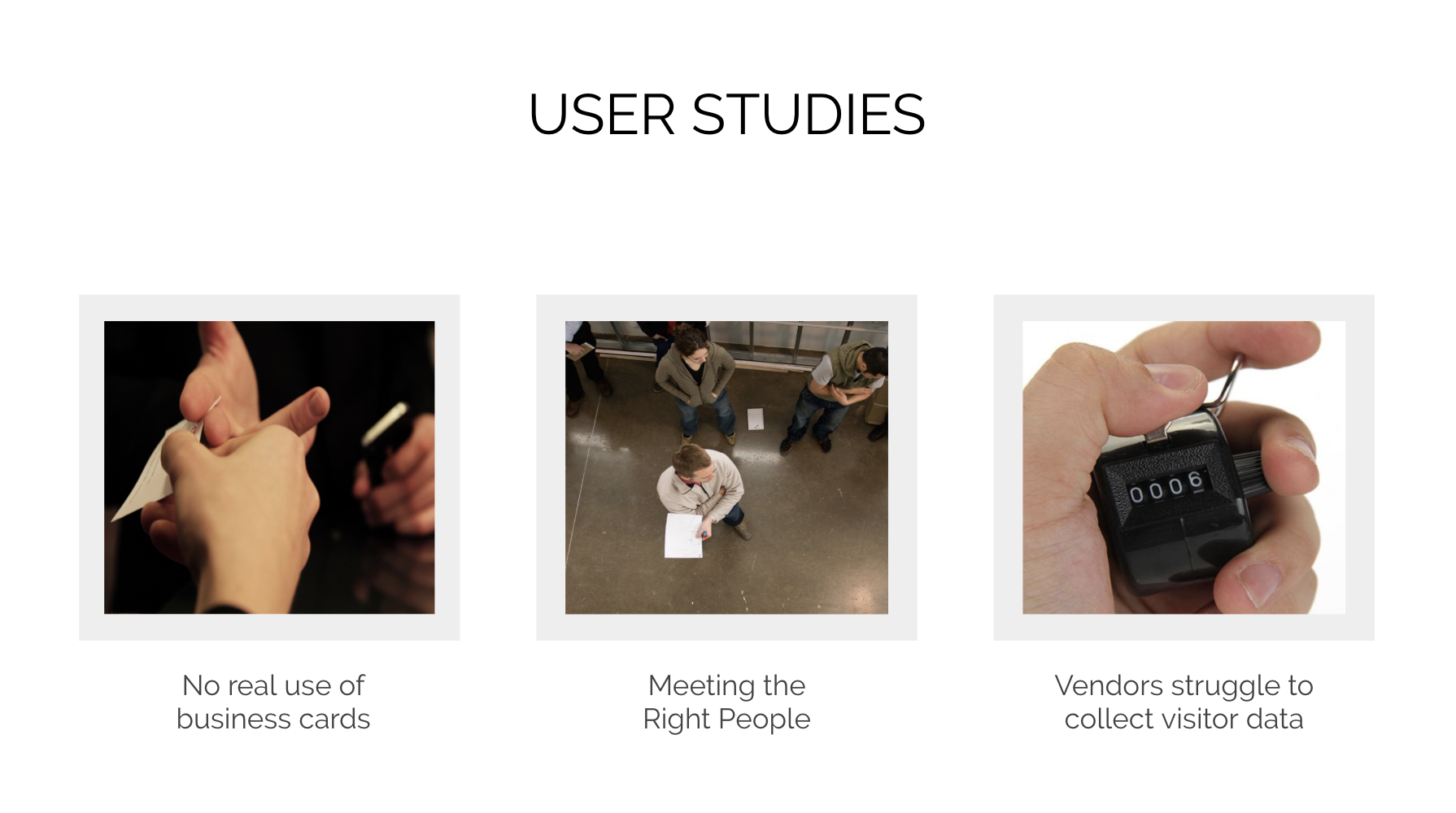
Through contextual inquiry and interviews with attendees and vendors, we found a consistent pattern: attendees struggled to sift through long vendor lists to find who was actually relevant to them, and connections that formed in person rarely survived the trip home — real relationship-building happened after the event, over email or LinkedIn, not during it. Meanwhile vendors and organizers had no way to capture real-time visitor data for trend analysis or CRM — everything ran through the same slow, manual channel: business cards.
Our Solution
Felix is a wearable device paired with a data analytics platform. When someone of interest — a matching attendee or vendor — comes within range, Felix alerts both parties and prompts a conversation, surfacing real-time information chosen by our recommendation algorithm. A handshake lets both sides exchange contact info instantly, no card exchange or app fumbling required. For vendors and organizers, Felix's dashboard turns that same interaction data into a live view of visitor trends during the event and a structured base for CRM follow-up afterward.
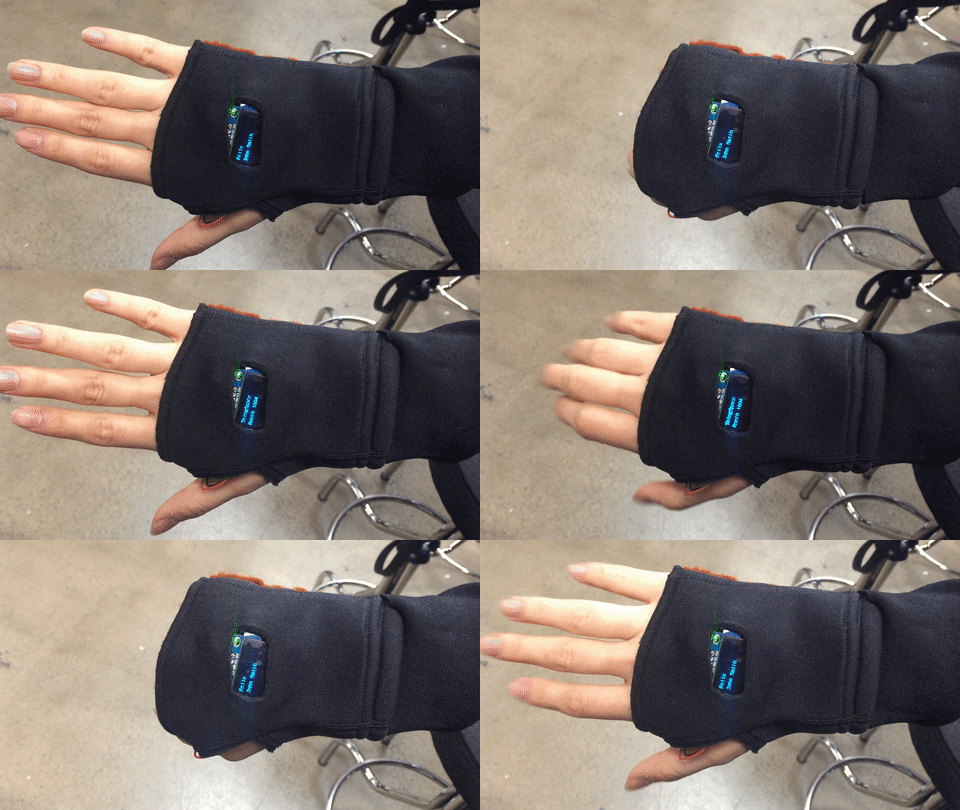
Optional wearable that will take in hand motion as interpersonal feedback
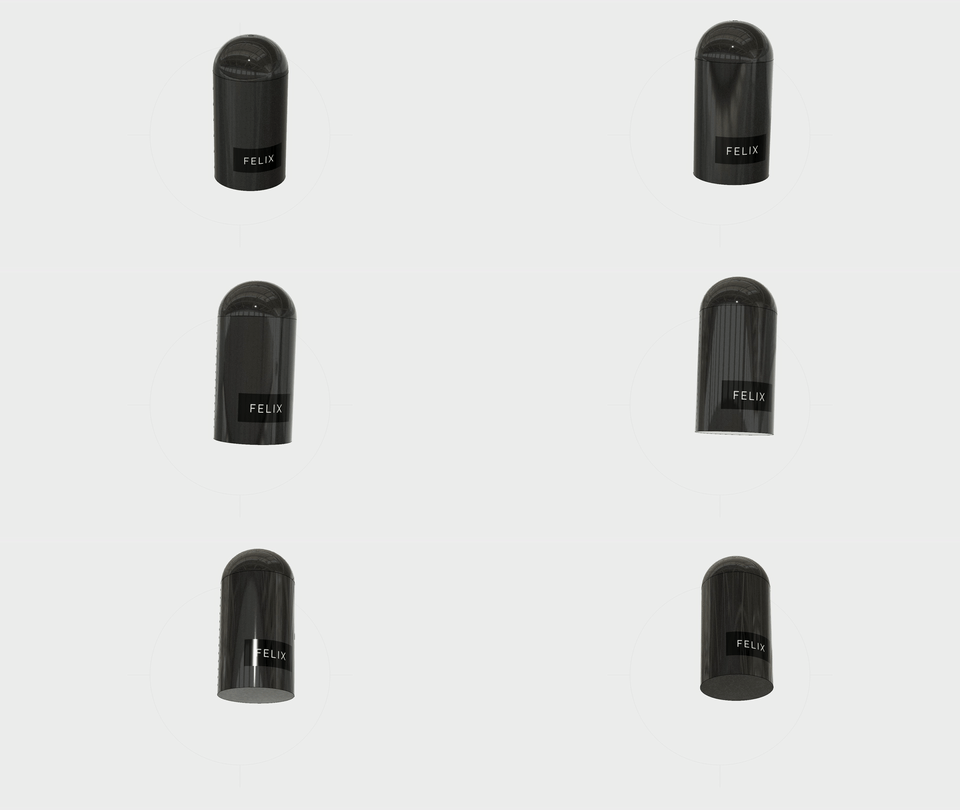
Beacons for vendors to collect visitor information

Badge that will responsively display relevant information for conversations and interactions
The research

Beyond the product, this project became a formal research study into why face-to-face interaction still resists being "solved" by technology. Despite years of advances in telecommunication — video, VR, social platforms, asynchronous messaging — nothing had really matched or extended the effectiveness of being physically present with someone. We wanted to understand what a wearable could add without getting in the way of the interaction itself.
We applied self-categorization theory to decide what information Felix should surface between two people, and designed the wearable's interface to sit at the periphery — present, but never disruptive to the conversation happening in front of it.
Our conclusion: Felix meaningfully improved the quality of in-person interactions and helped people build ties that would otherwise have depended on a follow-up email that might never get sent.